

Monday, 25 May 2026, 09:45 PM
January 10, 2026
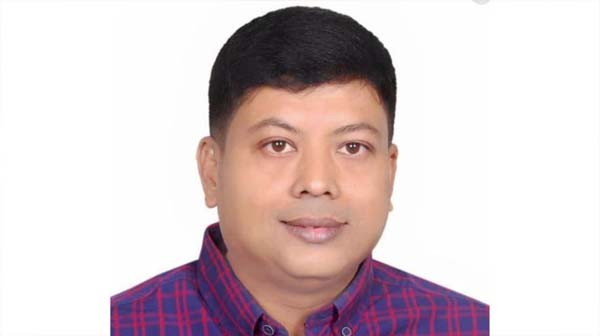 Police have arrested three people, including one of the alleged shooters, in connection with the murder of Swechchhasebak Dal leader Azizur Rahman Musabbir. Several teams from the Detective Branch (DB) of Dhaka Metropolitan Police conducted raids in Manikganj and Gazipur districts early today and made the arrests.
A senior DB official confirmed the development.
Speaking to The Daily Star on condition of anonymity, he said the arrestees include the alleged shooter, identified as Jinat, and the suspected planner, Billal.
The third person is believed to be an associate of the two, the official added.
On January 7, Azizur Rahman Musabbir was shot dead, while another man was injured, after miscreants opened fire on them on Kazi Nazrul Islam Avenue near Karwan Bazar's Star Hotel.
Musabbir was the former general secretary of Dhaka City North Swechchhasebak Dal, the volunteer wing of the Bangladesh Nationalist Party....
Police have arrested three people, including one of the alleged shooters, in connection with the murder of Swechchhasebak Dal leader Azizur Rahman Musabbir. Several teams from the Detective Branch (DB) of Dhaka Metropolitan Police conducted raids in Manikganj and Gazipur districts early today and made the arrests.
A senior DB official confirmed the development.
Speaking to The Daily Star on condition of anonymity, he said the arrestees include the alleged shooter, identified as Jinat, and the suspected planner, Billal.
The third person is believed to be an associate of the two, the official added.
On January 7, Azizur Rahman Musabbir was shot dead, while another man was injured, after miscreants opened fire on them on Kazi Nazrul Islam Avenue near Karwan Bazar's Star Hotel.
Musabbir was the former general secretary of Dhaka City North Swechchhasebak Dal, the volunteer wing of the Bangladesh Nationalist Party....
January 10, 2026
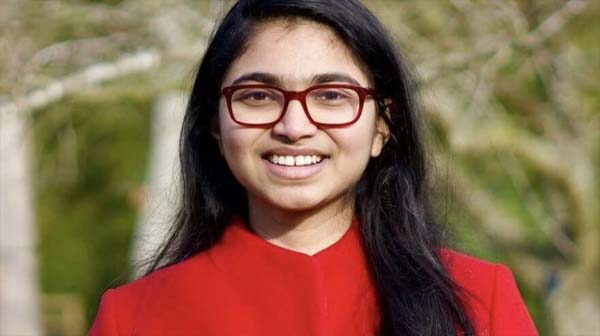 The Election Commission (EC) has declared the nomination paper of Tasnim Jara, an independent candidate for Dhaka-9, valid.
The decision came today around 12:30pm following a hearing of her appeal before the commission. On January 3, nomination papers of Tasnim Jara for the Dhaka-9 constituency (Khilgaon, Sobujbagh and Mugda) have been rejected by the returning officer following scrutiny.
She filed an appeal with the EC on January 5, challenging the cancellation of her nomination papers for the 13th National Election scheduled for February 12....
The Election Commission (EC) has declared the nomination paper of Tasnim Jara, an independent candidate for Dhaka-9, valid.
The decision came today around 12:30pm following a hearing of her appeal before the commission. On January 3, nomination papers of Tasnim Jara for the Dhaka-9 constituency (Khilgaon, Sobujbagh and Mugda) have been rejected by the returning officer following scrutiny.
She filed an appeal with the EC on January 5, challenging the cancellation of her nomination papers for the 13th National Election scheduled for February 12....
October 22, 2025
 Jewellers have cut gold prices by Tk 8,386 per bhori, thanks to a drop in the rates of pure gold in the local market.
From tomorrow, the price of each bhori (11.664 grammes) of 22-carat gold ornaments will be Tk 208,995, down from Tk 217,381.
The Bangladesh Jewellers Association took the decision to decrease gold prices in a meeting today, the association said in a press release.
On October 19, gold prices surged to yet another historic peak, reaching Tk 217,381 per bhori (approximately 11.664 grammes).
Prices of the precious metal in Bangladesh have been rising steadily, setting new records almost every week.
In September alone, the price of 22-carat gold rose by more than Tk 16,000 per bhori.
Industry insiders attribute the surge mainly to the international bullion market, the devaluation of the taka, economic uncertainty, and high inflation.
Although Bangladesh does not import significant volumes of gold, domestic prices remain closely aligned with global trends.
According to the Gold Policy 2018, annual domestic demand in Bangladesh stands between 20 and 40 tonnes.
Meanwhile, around 80 percent of the country's gold demand is met through smuggling, leading to substantial revenue losses for the government, said industry people.
During Bangladesh's Liberation War, gold was sold for Tk 170 per bhori. Within ten years, it reached Tk 3,750 per bhori. By 2000, it hit Tk 6,900, and by 2010, Tk 42,165.
In January 2018, gold crossed Tk 50,000 per bhori for the first time. Five years later, in July 2023, it hit Tk 100,000. After further jumps, it reached Tk 150,000 in February 2025, and later surged past Tk 200,000 per bhori....
Jewellers have cut gold prices by Tk 8,386 per bhori, thanks to a drop in the rates of pure gold in the local market.
From tomorrow, the price of each bhori (11.664 grammes) of 22-carat gold ornaments will be Tk 208,995, down from Tk 217,381.
The Bangladesh Jewellers Association took the decision to decrease gold prices in a meeting today, the association said in a press release.
On October 19, gold prices surged to yet another historic peak, reaching Tk 217,381 per bhori (approximately 11.664 grammes).
Prices of the precious metal in Bangladesh have been rising steadily, setting new records almost every week.
In September alone, the price of 22-carat gold rose by more than Tk 16,000 per bhori.
Industry insiders attribute the surge mainly to the international bullion market, the devaluation of the taka, economic uncertainty, and high inflation.
Although Bangladesh does not import significant volumes of gold, domestic prices remain closely aligned with global trends.
According to the Gold Policy 2018, annual domestic demand in Bangladesh stands between 20 and 40 tonnes.
Meanwhile, around 80 percent of the country's gold demand is met through smuggling, leading to substantial revenue losses for the government, said industry people.
During Bangladesh's Liberation War, gold was sold for Tk 170 per bhori. Within ten years, it reached Tk 3,750 per bhori. By 2000, it hit Tk 6,900, and by 2010, Tk 42,165.
In January 2018, gold crossed Tk 50,000 per bhori for the first time. Five years later, in July 2023, it hit Tk 100,000. After further jumps, it reached Tk 150,000 in February 2025, and later surged past Tk 200,000 per bhori....
October 22, 2025
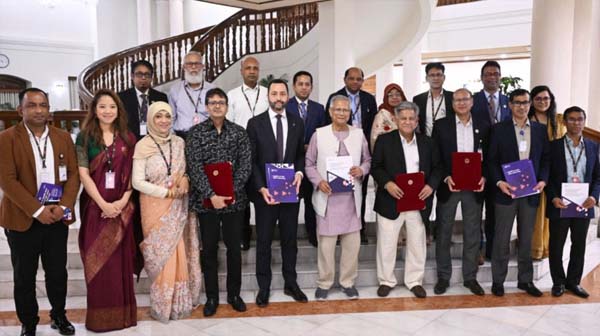 Chief Adviser Professor Muhammad Yunus today said Bangladesh has made history by advancing workers' legal rights, as the interim government ratified three conventions of the International Labour Organization (ILO).
Bangladesh today ratified three ILO conventions to improve worker safety, health, and protection against workplace violence and harassment.
Recalling the 2013 Rana Plaza disaster, the chief adviser said, "After the Rana Plaza tragedy, the then government agreed to do everything. But nothing happened as per their commitment. They kept saying 'it is being done, it will be done'. But we said 'no more it is being done, it will be done' -- we must do it."
The CA's press wing issued a press release after the ILO Convention signing ceremony was held at the State Guest House Jamuna.
"Since I took office as the chief adviser, labour rights were my first priority. I held meetings time and again and kept saying everywhere that this must be done. Signing this will benefit all of us," he said.
"I was told I had to go to the next Geneva meeting. I tried to understand why no one had attended the past meetings," Yunus added.
Labour and Employment as well as Shipping Adviser Brig Gen (retd) M Sakhawat Hussain signed the instruments of ratification on behalf of the government in presence of the chief adviser.
The three ratified conventions are: Occupational Safety and Health Convention, 1981 (No. 155); Promotional Framework for Occupational Safety and Health Convention, 2006 (No. 187); and Violence and Harassment Convention, 2019 (No. 190). Of these, Conventions 187 and 155 were declared as fundamental conventions by the ILO in 2022.
"We must keep our commitments. What the convention says, what rights it talks about, must be conveyed to everyone," the chief adviser said.
Terming the day as a memorable one in the history of labour rights in Bangladesh, he said, "From the tragedy of Rana Plaza to today's signing, we have reached a milestone."
"Our efforts will bear...
Chief Adviser Professor Muhammad Yunus today said Bangladesh has made history by advancing workers' legal rights, as the interim government ratified three conventions of the International Labour Organization (ILO).
Bangladesh today ratified three ILO conventions to improve worker safety, health, and protection against workplace violence and harassment.
Recalling the 2013 Rana Plaza disaster, the chief adviser said, "After the Rana Plaza tragedy, the then government agreed to do everything. But nothing happened as per their commitment. They kept saying 'it is being done, it will be done'. But we said 'no more it is being done, it will be done' -- we must do it."
The CA's press wing issued a press release after the ILO Convention signing ceremony was held at the State Guest House Jamuna.
"Since I took office as the chief adviser, labour rights were my first priority. I held meetings time and again and kept saying everywhere that this must be done. Signing this will benefit all of us," he said.
"I was told I had to go to the next Geneva meeting. I tried to understand why no one had attended the past meetings," Yunus added.
Labour and Employment as well as Shipping Adviser Brig Gen (retd) M Sakhawat Hussain signed the instruments of ratification on behalf of the government in presence of the chief adviser.
The three ratified conventions are: Occupational Safety and Health Convention, 1981 (No. 155); Promotional Framework for Occupational Safety and Health Convention, 2006 (No. 187); and Violence and Harassment Convention, 2019 (No. 190). Of these, Conventions 187 and 155 were declared as fundamental conventions by the ILO in 2022.
"We must keep our commitments. What the convention says, what rights it talks about, must be conveyed to everyone," the chief adviser said.
Terming the day as a memorable one in the history of labour rights in Bangladesh, he said, "From the tragedy of Rana Plaza to today's signing, we have reached a milestone."
"Our efforts will bear...
October 13, 2025
 The Mymensingh district administration has cancelled the publication declarations of 11 newspapers published from the district. The cancellation order was issued last Thursday, and official letters were delivered to the concerned publishers and editors on Sunday and Monday, according to the administration.
The newspapers whose declarations have been revoked are:
Dainik Ajker Mymensingh (edited by Md. Shamsul Alam Khan), Dainik Desher Khobor (edited by F.M.A. Salam), Dainik Bishwer Mukhopatra (edited by N.B.M. Ibrahim Khalil Rahim), Dainik Ishika (founded by the late Abdur Razzaq Talukder), Dainik Adommo Bangla (edited by Nasir Uddin Ahmed), Dainik Alokito Mymensingh and Dainik Digonto Bangla (edited by A.N.M. Faruk), Dainik Jahan (published by Sheikh Mehedi Hasan Nadim), Dainik Kishaner Desh (edited by Omar Faruk), Hridoye Bangladesh (edited by Farida Yasmin Ratna), Saptahik Poridhi (edited by Bikash Roy).
On Monday (October 13) afternoon, Additional Deputy Commissioner (ADC) of Mymensingh Umme Habiba Meera confirmed the cancellation, stating that letters were sent to all concerned editors and publishers last Thursday.
According to the official notice, on April 10 and 13, the 11 newspapers were found to have published identical reports and images on the second and third pages, and those issues were not printed from approved printing presses. Consequently, on April 16, the administration issued show-cause notices to 13 editors and publishers.
On April 21, the publishers responded, admitting the error and blaming the issue on an external printing press’s negligence and a breakdown in their own printing system. However, the explanations were deemed unsatisfactory and unacceptable.
Subsequently, on May 18, an executive magistrate conducted an on-site investigation, which confirmed that the 11 newspapers were not being printed from authorized presses—a clear violation of Sections 4 and 7 of the Printing Presses and Publications (Declaration and Registration)...
The Mymensingh district administration has cancelled the publication declarations of 11 newspapers published from the district. The cancellation order was issued last Thursday, and official letters were delivered to the concerned publishers and editors on Sunday and Monday, according to the administration.
The newspapers whose declarations have been revoked are:
Dainik Ajker Mymensingh (edited by Md. Shamsul Alam Khan), Dainik Desher Khobor (edited by F.M.A. Salam), Dainik Bishwer Mukhopatra (edited by N.B.M. Ibrahim Khalil Rahim), Dainik Ishika (founded by the late Abdur Razzaq Talukder), Dainik Adommo Bangla (edited by Nasir Uddin Ahmed), Dainik Alokito Mymensingh and Dainik Digonto Bangla (edited by A.N.M. Faruk), Dainik Jahan (published by Sheikh Mehedi Hasan Nadim), Dainik Kishaner Desh (edited by Omar Faruk), Hridoye Bangladesh (edited by Farida Yasmin Ratna), Saptahik Poridhi (edited by Bikash Roy).
On Monday (October 13) afternoon, Additional Deputy Commissioner (ADC) of Mymensingh Umme Habiba Meera confirmed the cancellation, stating that letters were sent to all concerned editors and publishers last Thursday.
According to the official notice, on April 10 and 13, the 11 newspapers were found to have published identical reports and images on the second and third pages, and those issues were not printed from approved printing presses. Consequently, on April 16, the administration issued show-cause notices to 13 editors and publishers.
On April 21, the publishers responded, admitting the error and blaming the issue on an external printing press’s negligence and a breakdown in their own printing system. However, the explanations were deemed unsatisfactory and unacceptable.
Subsequently, on May 18, an executive magistrate conducted an on-site investigation, which confirmed that the 11 newspapers were not being printed from authorized presses—a clear violation of Sections 4 and 7 of the Printing Presses and Publications (Declaration and Registration)...
October 12, 2025
 Bangladesh will begin its first-ever national typhoid vaccination campaign tomorrow, October 12, to protect children from typhoid fever. The month-long campaign aims to provide free injectable typhoid vaccines to around 50 million children aged between 9 months and under 15 years, according to a press release issued on Saturday (October 11) by Mahmudul Hasan, Public Relations Officer at the Ministry of Health and Family Welfare.
The campaign will be inaugurated on Sunday at Sir Salimullah Muslim Orphanage, Azimpur, under the title Typhoid Vaccination Campaign 2025. Health and Family Welfare Adviser Noorjahan Begum will attend as the chief guest, while Sharmin S. Murshid, Adviser to the Ministries of Social Welfare and Women and Children Affairs, will be present as a special guest.
The Directorate General of Health Services (DGHS) announced that even children without birth certificates will be included in the campaign to ensure no one is left behind. This is the first-ever national typhoid vaccination program in the country. The vaccine has been produced by India’s Serum Institute and supplied to Bangladesh through the support of Gavi, the Vaccine Alliance.
Professor Dr. Md. Sayedur Rahman, Special Assistant to the Chief Adviser of the Interim Government (in charge of the State Minister for Health), stated that the vaccine is fully safe and approved by the World Health Organization (WHO). It has already been successfully used in eight countries, including Nepal and Pakistan, with no major side effects reported.
According to the Health Ministry, students from pre-primary to class nine will receive the vaccine at schools and madrasas until October 30. After that, children aged 9 months to under 15 years will be vaccinated through door-to-door visits, while NGOs will cover street children in urban areas.
The government aims to vaccinate 49 million children under this campaign. So far, 16.8 million children have already registered, and the registration process is ongoing....
Bangladesh will begin its first-ever national typhoid vaccination campaign tomorrow, October 12, to protect children from typhoid fever. The month-long campaign aims to provide free injectable typhoid vaccines to around 50 million children aged between 9 months and under 15 years, according to a press release issued on Saturday (October 11) by Mahmudul Hasan, Public Relations Officer at the Ministry of Health and Family Welfare.
The campaign will be inaugurated on Sunday at Sir Salimullah Muslim Orphanage, Azimpur, under the title Typhoid Vaccination Campaign 2025. Health and Family Welfare Adviser Noorjahan Begum will attend as the chief guest, while Sharmin S. Murshid, Adviser to the Ministries of Social Welfare and Women and Children Affairs, will be present as a special guest.
The Directorate General of Health Services (DGHS) announced that even children without birth certificates will be included in the campaign to ensure no one is left behind. This is the first-ever national typhoid vaccination program in the country. The vaccine has been produced by India’s Serum Institute and supplied to Bangladesh through the support of Gavi, the Vaccine Alliance.
Professor Dr. Md. Sayedur Rahman, Special Assistant to the Chief Adviser of the Interim Government (in charge of the State Minister for Health), stated that the vaccine is fully safe and approved by the World Health Organization (WHO). It has already been successfully used in eight countries, including Nepal and Pakistan, with no major side effects reported.
According to the Health Ministry, students from pre-primary to class nine will receive the vaccine at schools and madrasas until October 30. After that, children aged 9 months to under 15 years will be vaccinated through door-to-door visits, while NGOs will cover street children in urban areas.
The government aims to vaccinate 49 million children under this campaign. So far, 16.8 million children have already registered, and the registration process is ongoing....
October 12, 2025
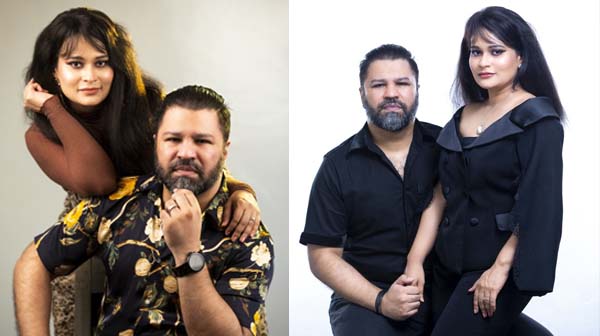 For Putul Sajia Sultana and Syed Reza Ali, love has always revolved around music. Their little world grew even more beautiful with the arrival of their daughter, Geetoleena. Despite their differences in taste, with Putul finding happiness in regional songs, while Reza leans towards metal. Even their football loyalties differ, as one supports Brazil and the other Argentina. Yet it is this very passion for music that drew Reza from Australia to Dhaka, where he not only found his calling, but also his soulmate.
The couple recently visited The Daily Star, complementing each other in coordinated outfits. Between interviews and photographs, they could not stop capturing moments of one another on their phones. Married for four years, they describe themselves as best friends who respect each other's personal space while nurturing their shared world. Although deeply in love, they affectionately address each other using tui, a term that might sound a bit strange to others, but feels natural to them.
"I am used to calling her tui because we were friends first. Some might find it odd, but it does not bother us. Our friendship is what makes our relationship special," laughed Reza.
Their love story was never about formal confessions. Instead, it unfolded naturally. Their families, especially Putul's mother-in-law, could see that they were made for each other.
"We first met at a Valentine's Day programme organised by NTV in Australia. We had two shows in Sydney and Melbourne. Our first interaction was brief, only a one-hour practice session on February 16. I returned to Bangladesh soon after, but we stayed connected on Facebook. For a long time, we did not even exchange a simple hello," recalled Putul.
Reza, spontaneous by nature, once had everything. He had a stable banking career and an Australian passport. Yet in 2019, he came back to pursue music in Dhaka.
"I made the decision within hours," he shared. "After years in banking, I felt suffocated. I could not give time to my...
For Putul Sajia Sultana and Syed Reza Ali, love has always revolved around music. Their little world grew even more beautiful with the arrival of their daughter, Geetoleena. Despite their differences in taste, with Putul finding happiness in regional songs, while Reza leans towards metal. Even their football loyalties differ, as one supports Brazil and the other Argentina. Yet it is this very passion for music that drew Reza from Australia to Dhaka, where he not only found his calling, but also his soulmate.
The couple recently visited The Daily Star, complementing each other in coordinated outfits. Between interviews and photographs, they could not stop capturing moments of one another on their phones. Married for four years, they describe themselves as best friends who respect each other's personal space while nurturing their shared world. Although deeply in love, they affectionately address each other using tui, a term that might sound a bit strange to others, but feels natural to them.
"I am used to calling her tui because we were friends first. Some might find it odd, but it does not bother us. Our friendship is what makes our relationship special," laughed Reza.
Their love story was never about formal confessions. Instead, it unfolded naturally. Their families, especially Putul's mother-in-law, could see that they were made for each other.
"We first met at a Valentine's Day programme organised by NTV in Australia. We had two shows in Sydney and Melbourne. Our first interaction was brief, only a one-hour practice session on February 16. I returned to Bangladesh soon after, but we stayed connected on Facebook. For a long time, we did not even exchange a simple hello," recalled Putul.
Reza, spontaneous by nature, once had everything. He had a stable banking career and an Australian passport. Yet in 2019, he came back to pursue music in Dhaka.
"I made the decision within hours," he shared. "After years in banking, I felt suffocated. I could not give time to my...
October 11, 2025
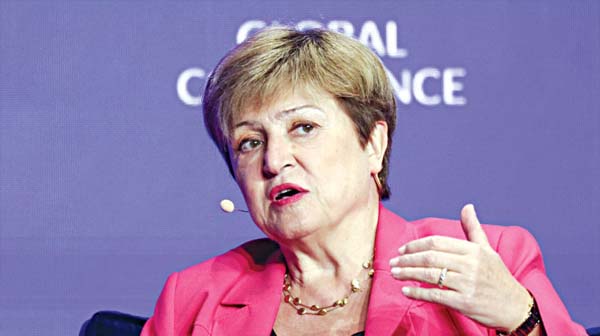 The global economy is doing better than expected, even as it faces prolonged uncertainty and underwhelming medium-term growth prospects, the head of the IMF said Wednesday.
The world economy is doing "better than feared, but worse than we need," International Monetary Fund Managing Director Kristalina Georgieva told reporters in Washington.
She added that the Fund now expects global growth to slow "only slightly this year and next," propped up by better-than-expected conditions in the United States, and among some other advanced, emerging market and developing countries.
Georgieva's remarks came ahead of next week's gathering of finance ministers and central bank governors at the World Bank and the IMF in Washington.
Trade is once again likely to dominate the agenda at the annual meetings, following US President Donald Trump's decision earlier this year to unleash sweeping tariffs against many trading partners.
"All signs point to a world economy that has generally withstood acute strains from multiple shocks," Georgieva said, pointing to "improved policy fundamentals," the adaptability of the private sector, lower-than-expected tariffs, and supportive financial conditions. "The world has avoided a tit-for-tat slide into trade war -- so far," she added.
She noted that the average US tariff rate has fallen from 23 percent in April to 17.5 percent today, while the US effective tariff rate of around 10 percent remains "far above" the rest of the world.
But, she warned, the full effect of those tariffs "is still to unfold," adding that the resilience of the world economy has yet to be "fully tested."
Against this backdrop, the Fund still expects global growth to remain at roughly three percent over the medium term, in line with previous forecasts -- below the 3.7 percent, on average, seen before the Covid-19 pandemic. "Global growth patterns have been changing over the years, notably with China decelerating steadily while India develops into a key growth engine,"...
The global economy is doing better than expected, even as it faces prolonged uncertainty and underwhelming medium-term growth prospects, the head of the IMF said Wednesday.
The world economy is doing "better than feared, but worse than we need," International Monetary Fund Managing Director Kristalina Georgieva told reporters in Washington.
She added that the Fund now expects global growth to slow "only slightly this year and next," propped up by better-than-expected conditions in the United States, and among some other advanced, emerging market and developing countries.
Georgieva's remarks came ahead of next week's gathering of finance ministers and central bank governors at the World Bank and the IMF in Washington.
Trade is once again likely to dominate the agenda at the annual meetings, following US President Donald Trump's decision earlier this year to unleash sweeping tariffs against many trading partners.
"All signs point to a world economy that has generally withstood acute strains from multiple shocks," Georgieva said, pointing to "improved policy fundamentals," the adaptability of the private sector, lower-than-expected tariffs, and supportive financial conditions. "The world has avoided a tit-for-tat slide into trade war -- so far," she added.
She noted that the average US tariff rate has fallen from 23 percent in April to 17.5 percent today, while the US effective tariff rate of around 10 percent remains "far above" the rest of the world.
But, she warned, the full effect of those tariffs "is still to unfold," adding that the resilience of the world economy has yet to be "fully tested."
Against this backdrop, the Fund still expects global growth to remain at roughly three percent over the medium term, in line with previous forecasts -- below the 3.7 percent, on average, seen before the Covid-19 pandemic. "Global growth patterns have been changing over the years, notably with China decelerating steadily while India develops into a key growth engine,"...
October 11, 2025
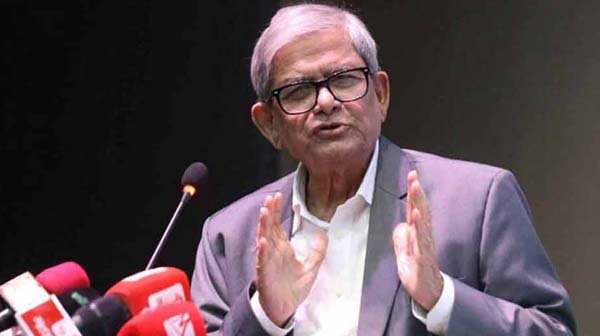 BNP Secretary General Mirza Fakhrul Islam Alamgir has said that the only way to restore democracy in Bangladesh is through elections. He stated, “No matter how many reforms we make or how many intellectual strategies we devise, unless a government is established through elections, we cannot return to democracy. The only way to restore a democratic system is through a free, fair, and impartial election. There is no alternative path to democracy.”
He made these remarks on Friday at a discussion meeting held at the Institution of Engineers, Bangladesh (IEB) in Dhaka. The event was organized to mark the martyrdom anniversary of Naziruddin Jehad, who was killed during the anti-autocracy movement. Leaders of the All-Party Student Unity, who played a key role in the 1990 mass uprising, also attended the discussion.
“The people of Bangladesh are freedom-loving and democracy-loving,” Fakhrul said. “They have fought, struggled, and shed blood for independence. Unfortunately, they have stumbled time and again in that struggle. Yet every time they fell, they rose again—through movement and struggle, they achieved victory.”
He added, “The monster Hasina has destroyed everything in the country—the judiciary, the administration, the electoral system, our economy, health, and education—all have been wrecked by her.”
Commenting on some groups claiming the July movement as their own, Fakhrul said, “BNP has been fighting for democracy for a long time.”
Responding to a statement by Nasir Uddin Patwari, chief coordinator of the SNIP, who said that if their party is not given the ‘Shapla’ (water lily) symbol, BNP’s ‘Sheaf of Paddy’ symbol should be cancelled, Fakhrul remarked, “Brother, we have not objected to your symbol. The Election Commission will decide which symbol you get. Why this unnecessary tug-of-war over BNP’s ‘Sheaf of Paddy’? Because the ‘Sheaf of Paddy’ is unstoppable. Across the country, people are chanting slogans for the...
BNP Secretary General Mirza Fakhrul Islam Alamgir has said that the only way to restore democracy in Bangladesh is through elections. He stated, “No matter how many reforms we make or how many intellectual strategies we devise, unless a government is established through elections, we cannot return to democracy. The only way to restore a democratic system is through a free, fair, and impartial election. There is no alternative path to democracy.”
He made these remarks on Friday at a discussion meeting held at the Institution of Engineers, Bangladesh (IEB) in Dhaka. The event was organized to mark the martyrdom anniversary of Naziruddin Jehad, who was killed during the anti-autocracy movement. Leaders of the All-Party Student Unity, who played a key role in the 1990 mass uprising, also attended the discussion.
“The people of Bangladesh are freedom-loving and democracy-loving,” Fakhrul said. “They have fought, struggled, and shed blood for independence. Unfortunately, they have stumbled time and again in that struggle. Yet every time they fell, they rose again—through movement and struggle, they achieved victory.”
He added, “The monster Hasina has destroyed everything in the country—the judiciary, the administration, the electoral system, our economy, health, and education—all have been wrecked by her.”
Commenting on some groups claiming the July movement as their own, Fakhrul said, “BNP has been fighting for democracy for a long time.”
Responding to a statement by Nasir Uddin Patwari, chief coordinator of the SNIP, who said that if their party is not given the ‘Shapla’ (water lily) symbol, BNP’s ‘Sheaf of Paddy’ symbol should be cancelled, Fakhrul remarked, “Brother, we have not objected to your symbol. The Election Commission will decide which symbol you get. Why this unnecessary tug-of-war over BNP’s ‘Sheaf of Paddy’? Because the ‘Sheaf of Paddy’ is unstoppable. Across the country, people are chanting slogans for the...
October 11, 2025
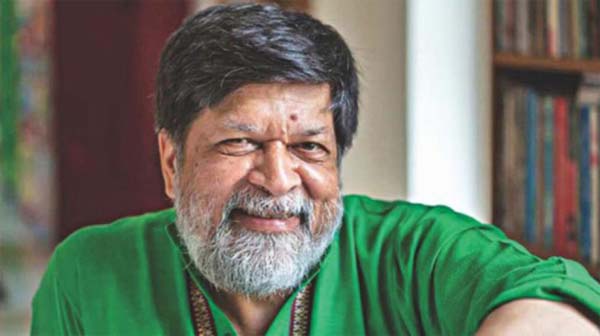 Renowned photographer and activist Shahidul Alam, who was released by Israeli authorities on Friday after joining a Free Palestine campaign, is expected to arrive in Dhaka at 4:55 am tomorrow.
Earlier in the day, Shahidul reached Istanbul on a Turkish Airlines flight around 2:30 pm local time. He was received by Bangladesh Consul General in Istanbul Mohammad Mizanur Rahman, said a statement issued by the chief adviser's press wing.
Bangladesh Ambassador to Turkey Md Amanur Rahman said Shahidul's return flight to Dhaka was scheduled to depart Istanbul at 6:45 pm local time on Friday.
Chief Adviser Professor Muhammad Yunus has expressed gratitude to Turkish President Recep Tayyip Erdoğan for his cooperation in facilitating Shahidul Alam's release and safe repatriation from Israel.
Following Shahidul Alam's detention by Israeli authorities, Bangladesh embassies in Jordan, Egypt, and Turkey were instructed to engage with the respective foreign ministries and take immediate diplomatic measures to secure his release....
Renowned photographer and activist Shahidul Alam, who was released by Israeli authorities on Friday after joining a Free Palestine campaign, is expected to arrive in Dhaka at 4:55 am tomorrow.
Earlier in the day, Shahidul reached Istanbul on a Turkish Airlines flight around 2:30 pm local time. He was received by Bangladesh Consul General in Istanbul Mohammad Mizanur Rahman, said a statement issued by the chief adviser's press wing.
Bangladesh Ambassador to Turkey Md Amanur Rahman said Shahidul's return flight to Dhaka was scheduled to depart Istanbul at 6:45 pm local time on Friday.
Chief Adviser Professor Muhammad Yunus has expressed gratitude to Turkish President Recep Tayyip Erdoğan for his cooperation in facilitating Shahidul Alam's release and safe repatriation from Israel.
Following Shahidul Alam's detention by Israeli authorities, Bangladesh embassies in Jordan, Egypt, and Turkey were instructed to engage with the respective foreign ministries and take immediate diplomatic measures to secure his release....
Channel DTV
নির্মান ও প্রযুক্তি: 